
Paradise Ponds and Falls is a design approach that focuses on creating balanced, natural-looking water landscapes that feel both beautiful and functional.
The concept behind Paradise Ponds and Falls is not just about placing water in a yard, but about shaping entire outdoor environments that flow naturally with the land.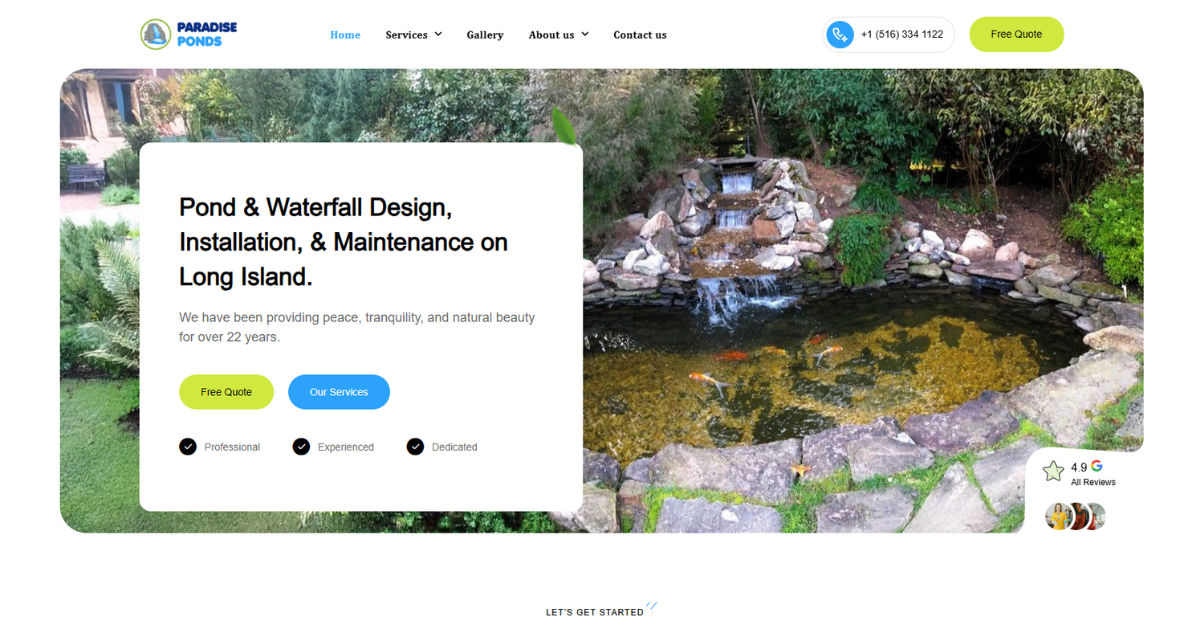
In modern landscape design, Paradise Ponds and Falls has become a popular reference point for homeowners and designers who want ponds that look natural, stay clean, and support wildlife. The method behind Paradise Ponds and Falls is built on harmony between water movement, plant life, stone placement, and long-term maintenance planning.
Throughout this guide, we will explore how Paradise Ponds and Falls approaches pond layouts in a structured, thoughtful way. You will learn how design decisions are made, why certain layouts work better than others, and how each element connects to the bigger picture. By the end, you will understand why Paradise Ponds and Falls is considered a complete system for pond planning and construction.
Core Philosophy of Pond Layout Design
At the heart of Paradise Ponds and Falls is the idea that ponds should look like they naturally belong in their environment. Instead of rigid shapes, Paradise Ponds and Falls prefers organic curves, uneven shorelines, and flowing transitions between land and water.
The philosophy of Paradise Ponds and Falls also emphasizes balance between aesthetics and function. A pond is not only a decorative feature but also a living ecosystem. That is why Paradise Ponds and Falls designs include filtration flow paths, oxygenation zones, and plant integration from the beginning.
Another key principle of Paradise Ponds and Falls is layering. This means designing ponds with multiple depths, textures, and visual focal points. Each layer in Paradise Ponds and Falls layouts serves a purpose, whether it is for fish habitat, plant growth, or water movement.
Site Evaluation and Natural Integration
Before any layout is designed, Paradise Ponds and Falls begins with a detailed site evaluation. This includes studying slope, sunlight exposure, soil type, and existing vegetation.
In Paradise Ponds and Falls planning, slope is especially important because it helps determine where waterfalls and streams can naturally flow. A gentle slope allows Paradise Ponds and Falls designers to incorporate cascading water features without heavy excavation.
Sunlight is another key factor in Paradise Ponds and Falls layouts. Too much direct sun can cause algae growth, while too much shade can limit plant health. That is why Paradise Ponds and Falls carefully positions ponds to achieve balanced light exposure throughout the day.
Soil type also affects how Paradise Ponds and Falls constructs pond foundations. Clay-heavy soil may retain water better, while sandy soil may require additional lining and reinforcement.
Water Flow and Circulation Design
One of the most important elements in Paradise Ponds and Falls pond layouts is water circulation. Without proper movement, ponds can become stagnant, leading to poor water quality.
Paradise Ponds and Falls designs always include a clear flow path. Water typically moves from a higher elevation waterfall or stream into the main pond basin, and then through a filtration system before being recirculated.
In many Paradise Ponds and Falls projects, hidden pumps are used to maintain continuous movement. This ensures oxygen levels remain stable and supports fish health.
The circulation design in Paradise Ponds and Falls is not random. It is carefully mapped so that every part of the pond receives movement. Even corners and shallow edges in Paradise Ponds and Falls layouts are designed to avoid dead zones.
Zoning the Pond Layout
A key technique used by Paradise Ponds and Falls is zoning. This means dividing the pond into functional areas based on depth and purpose.
In Paradise Ponds and Falls, shallow zones are typically used for aquatic plants. These areas help filter water naturally and provide shelter for small wildlife.
Mid-depth zones in Paradise Ponds and Falls designs are often used for fish movement. These areas balance temperature and oxygen levels.
Deep zones are essential in Paradise Ponds and Falls layouts because they provide stability during temperature changes and offer safe areas for fish during extreme weather.
By dividing the pond into zones, Paradise Ponds and Falls ensures that each part of the ecosystem has a clear role.
Waterfalls and Stream Integration
Waterfalls are a signature feature in Paradise Ponds and Falls designs. They are not only decorative but also functional.
In Paradise Ponds and Falls layouts, waterfalls help oxygenate the water. As water drops and splashes, it mixes with air and increases oxygen levels in the pond.
Streams are also commonly used in Paradise Ponds and Falls projects. They connect different water features and create a natural flow across the landscape.
The placement of waterfalls in Paradise Ponds and Falls is carefully planned. They are usually positioned at elevated points to allow gravity-driven movement. This makes the entire system more efficient and visually appealing.
Natural Aesthetic Principles
A major goal of Paradise Ponds and Falls is to make ponds look like they were formed by nature rather than built by humans.
To achieve this, Paradise Ponds and Falls uses irregular shapes instead of geometric outlines. Rocks are placed in clusters rather than evenly spaced patterns.
Plant selection in Paradise Ponds and Falls also plays a big role in aesthetics. Native plants are preferred because they blend naturally with the environment and require less maintenance.
Edges in Paradise Ponds and Falls designs are often softened with gravel, stones, and aquatic vegetation. This helps hide liners and creates a seamless transition from land to water.
Filtration and Water Quality Systems
Clean water is essential in every Paradise Ponds and Falls design. That is why filtration systems are built into the layout from the beginning.
In Paradise Ponds and Falls, biological filtration is commonly used. This involves beneficial bacteria breaking down waste and maintaining water clarity.
Mechanical filtration is also part of Paradise Ponds and Falls systems. It removes debris such as leaves and sediment before they accumulate.
Many Paradise Ponds and Falls layouts include skimmers and bottom drains to keep water moving efficiently. These systems are hidden within the design so they do not affect the natural appearance.
Plant Ecosystem Integration
Plants are essential in Paradise Ponds and Falls pond layouts. They are not just decorative but functional components of the ecosystem.
In Paradise Ponds and Falls, floating plants help reduce sunlight penetration and control algae growth. Marginal plants stabilize edges and prevent erosion.
Submerged plants in Paradise Ponds and Falls oxygenate the water and provide shelter for aquatic life.
The selection of plants in Paradise Ponds and Falls is always based on climate compatibility and ecological balance. This ensures long-term sustainability.
Step-by-Step Layout Planning Process
The planning process in Paradise Ponds and Falls follows a structured sequence.
First, the site is measured and mapped. In Paradise Ponds and Falls, this helps determine scale and positioning.
Next, the shape of the pond is sketched. Paradise Ponds and Falls avoids straight lines and focuses on natural curves.
After that, water flow paths are designed. In Paradise Ponds and Falls, this ensures proper circulation and waterfall placement.
Then, depth zones are added. Paradise Ponds and Falls uses these zones to support ecosystems.
Finally, filtration and planting plans are integrated. This completes the Paradise Ponds and Falls layout before construction begins.
Materials and Construction Techniques
Material selection is a critical part of Paradise Ponds and Falls design philosophy.
Natural stone is widely used in Paradise Ponds and Falls projects because it blends well with outdoor environments.
Flexible liners are also used in Paradise Ponds and Falls to shape irregular pond forms without leakage.
Gravel and sand layers are added in Paradise Ponds and Falls construction to stabilize the base and support plant growth.
Every material choice in Paradise Ponds and Falls is made with durability and natural appearance in mind.
Maintenance and Long-Term Sustainability
A well-designed pond should be easy to maintain. That is why Paradise Ponds and Falls integrates maintenance planning into every layout.
In Paradise Ponds and Falls, easy access points are included for cleaning filters and pumps.
Plant growth is controlled in Paradise Ponds and Falls systems to prevent overgrowth and imbalance.
Seasonal adjustments are also part of Paradise Ponds and Falls maintenance strategy, ensuring the pond remains stable year-round.
Because of this planning, Paradise Ponds and Falls ponds are known for long-term sustainability and reduced upkeep needs.
Environmental and Ecological Benefits
Beyond aesthetics, Paradise Ponds and Falls supports local ecosystems.
Wildlife such as frogs, birds, and beneficial insects are often attracted to Paradise Ponds and Falls environments.
Water recycling systems in Paradise Ponds and Falls reduce waste and improve environmental efficiency.
By creating balanced ecosystems, Paradise Ponds and Falls contributes to biodiversity in residential and commercial landscapes.
Common Design Mistakes Avoided
One reason Paradise Ponds and Falls layouts are successful is because they avoid common mistakes.
For example, overly deep or shallow ponds are avoided in Paradise Ponds and Falls planning because they disrupt balance.
Another mistake avoided by Paradise Ponds and Falls is poor water circulation, which leads to algae buildup.
Incorrect plant placement is also avoided in Paradise Ponds and Falls, ensuring each plant serves a purpose in the ecosystem.
Case Study Style Layout Example
In a typical Paradise Ponds and Falls project, a sloped backyard might be transformed into a multi-layer water system.
The upper section in Paradise Ponds and Falls would feature a waterfall source. Water would then flow into a mid-level stream and finally into a large pond basin.
Rocks and plants would be arranged in Paradise Ponds and Falls style to create a natural transition between each section.
This type of layout shows how Paradise Ponds and Falls turns simple land into a dynamic water ecosystem.
Conclusion
The design approach of Paradise Ponds and Falls is a complete system that blends nature, engineering, and aesthetics into one unified concept. From site analysis to water circulation, every step in Paradise Ponds and Falls is carefully planned to create balanced, sustainable ponds.
What makes Paradise Ponds and Falls unique is its attention to natural flow and ecosystem health. Instead of forcing water into artificial shapes, Paradise Ponds and Falls works with the land to create something that feels organic and alive.
By using zoning, circulation systems, natural materials, and ecological planning, Paradise Ponds and Falls delivers pond layouts that are both beautiful and functional. Whether for a small garden or a large landscape, the principles of Paradise Ponds and Falls ensure long-term success and visual harmony.
Ultimately, Paradise Ponds and Falls is not just about building ponds—it is about creating living environments that grow, evolve, and bring nature closer to everyday spaces.